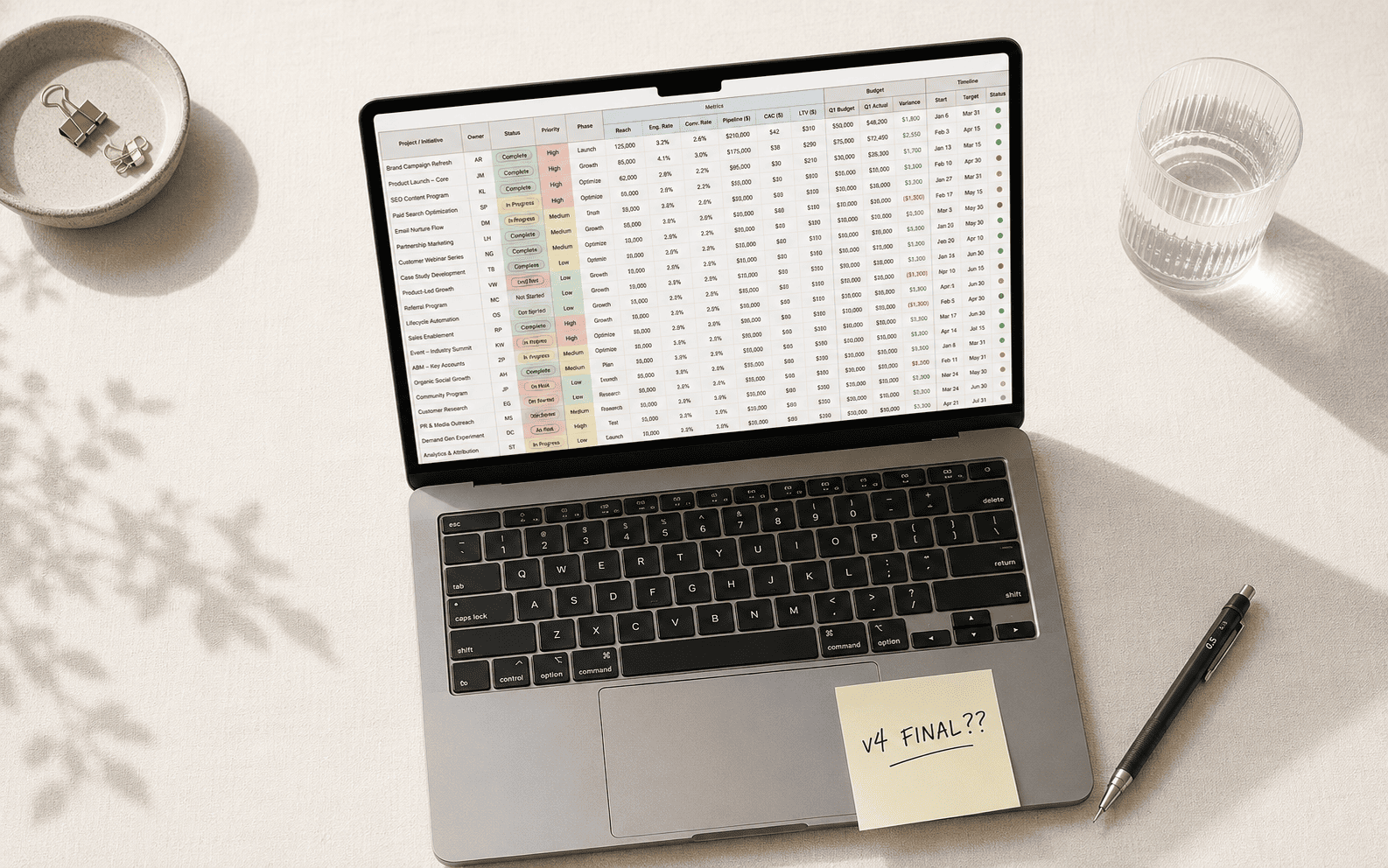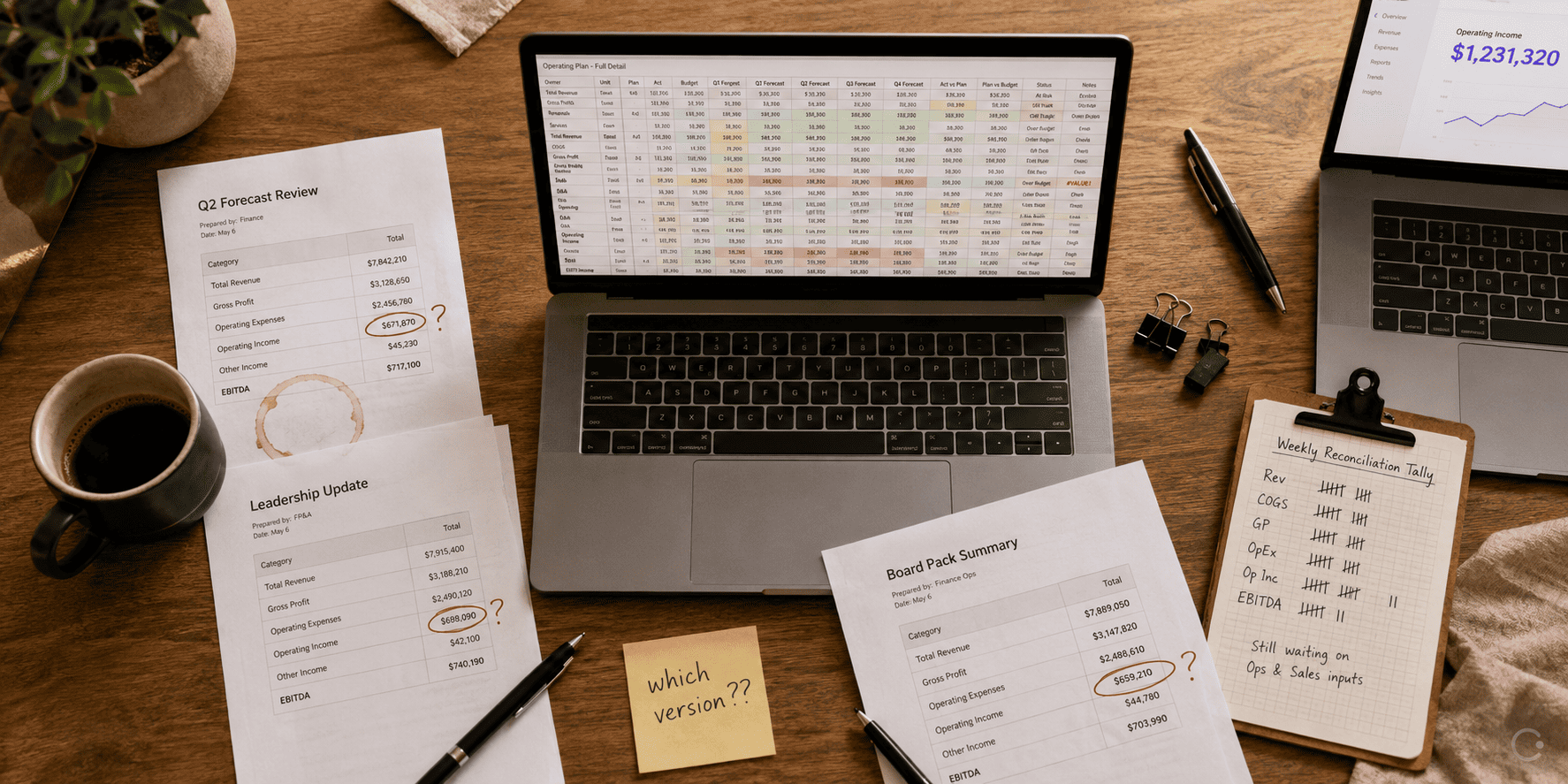
Spreadsheets are the most successful business software ever made. They're flexible, free to start, and everyone already knows how to use them. Most growing companies run on them far longer than anyone planned — and that's usually fine, right up until it isn't.
The hard part is that outgrowing spreadsheets rarely announces itself. There's no alarm — just a slow accumulation of small frictions that, added up, quietly tax the whole business. Here are five signs the patchwork has stopped serving you.
1. The same number lives in three places
Stock on hand is in one sheet, the finance team keeps another, and the warehouse has a third on a clipboard. When they disagree — and they will — someone spends an afternoon reconciling them. A single source of truth means the number exists once, and everyone reads the same value.
2. Reporting is a monthly event, not a glance
If leadership has to wait until month-end for numbers — and those numbers are stale the moment they arrive — you're steering by the rear-view mirror. Live dashboards turn reporting from a scramble into something you simply look at.
3. Onboarding a new hire means inheriting tribal knowledge
When the process only works because one person knows which tab to update in what order, you don't have a process — you have a risk. Systems encode the workflow so it survives the people.
You don't replace spreadsheets because they're bad. You replace them when the cost of keeping them in sync exceeds the cost of a real system.
4. Errors are caught by customers, not by you
A mistyped cell becomes a wrong invoice becomes an awkward phone call. Manual data entry has no guardrails. A system with validation and automation catches the error before it ever leaves the building.
5. Growth makes everything slower, not faster
This is the clearest sign of all. If every new order, hire, or location adds manual overhead instead of being absorbed, your tools are working against your success. The right architecture lets you grow without the back office growing with it.
What changes when you make the move
A well-built ERP replaces the patchwork with one connected system: every department working from the same live data, routine work automated, and leadership able to see the whole operation in real time. It isn't about adding software — it's about removing the manual seams between the tools you already rely on.
If two or three of these signs felt familiar, it's worth a conversation. The goal isn't a bigger system — it's the right one, built around how your business actually works.