Interfaces people actually want to use.
From user research through high-fidelity UI and design systems — designed around what users need to accomplish, validated with prototypes before a line of production code is written.
Start a design conversation →The Problem
Most UI is designed around what the product does. A good interface is designed around what the user is trying to accomplish — and the gap between those two things is where software gets abandoned.
We start every design engagement with discovery: understanding the actual user, the actual workflow, and the actual friction in the current experience. The interface that comes out of that process looks different — and performs differently — from one that starts with a wireframe template and a list of features to fit in.
What's included
Discovery to delivery — the full design process, or just the pieces you need.
User Research
Interviews, workflow mapping and problem definition — the foundation everything else builds on.
Wireframing & Prototyping
Low and mid-fidelity prototypes validated with real users before design goes final.
High-Fidelity UI
Pixel-precise designs with all states, interactions and edge cases documented.
Design Systems
Component libraries and token-based systems that keep the product consistent as it grows.
Usability Testing
Testing with target users before launch — finding friction before customers do.
Dev Handoff
Annotated specs, assets and motion guidelines that make implementation accurate.
A consumer app, opened every single day.
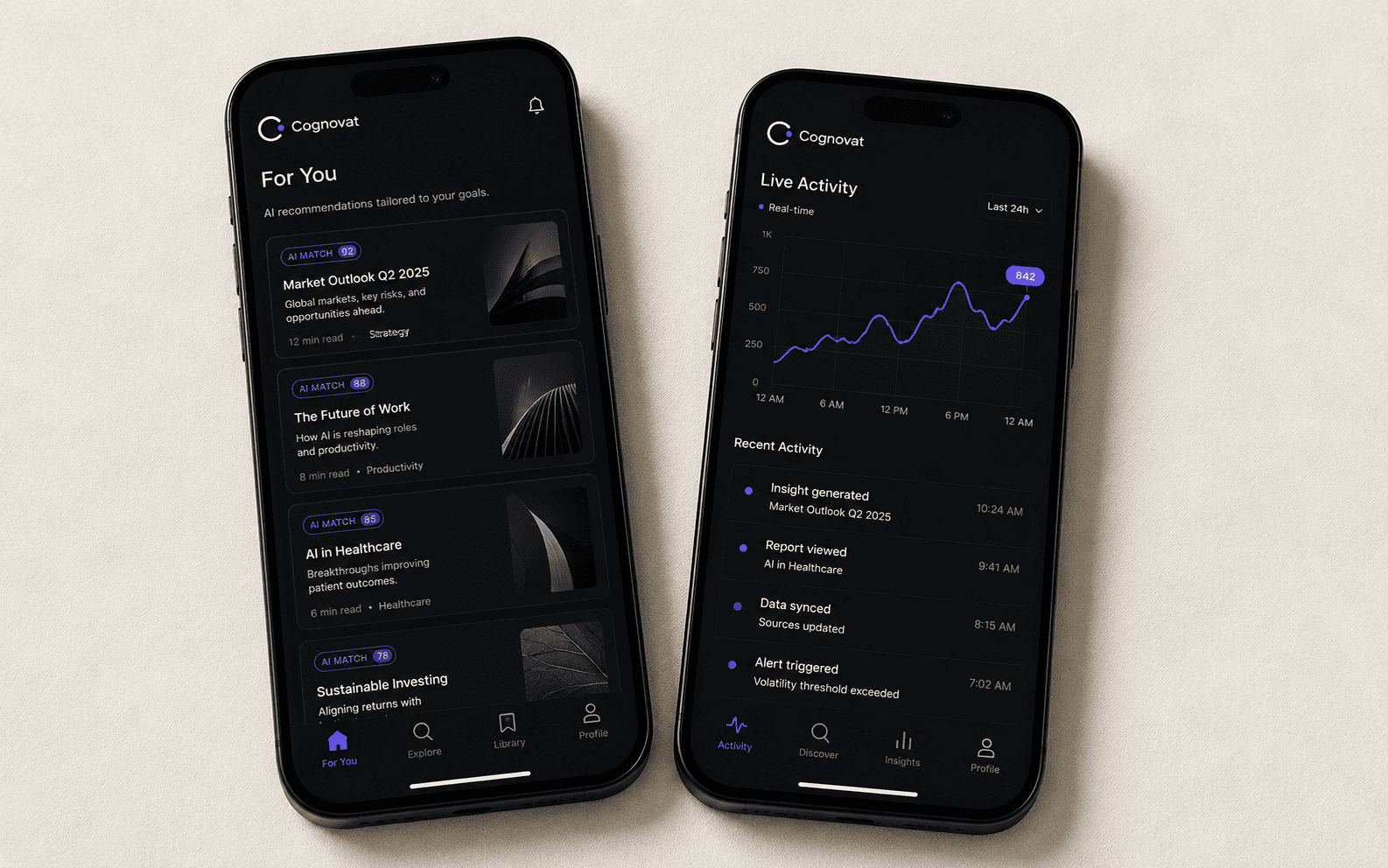
The AI-powered feed and real-time activity screen were designed around daily user sessions — tested with prototypes before engineering began. The result is an app people return to by habit.
Read the case study →